What happened on October 25
All 5 specimens from this file, spanning 1400 to 1944, with the story behind each photograph.
Reveal the full answer key
-
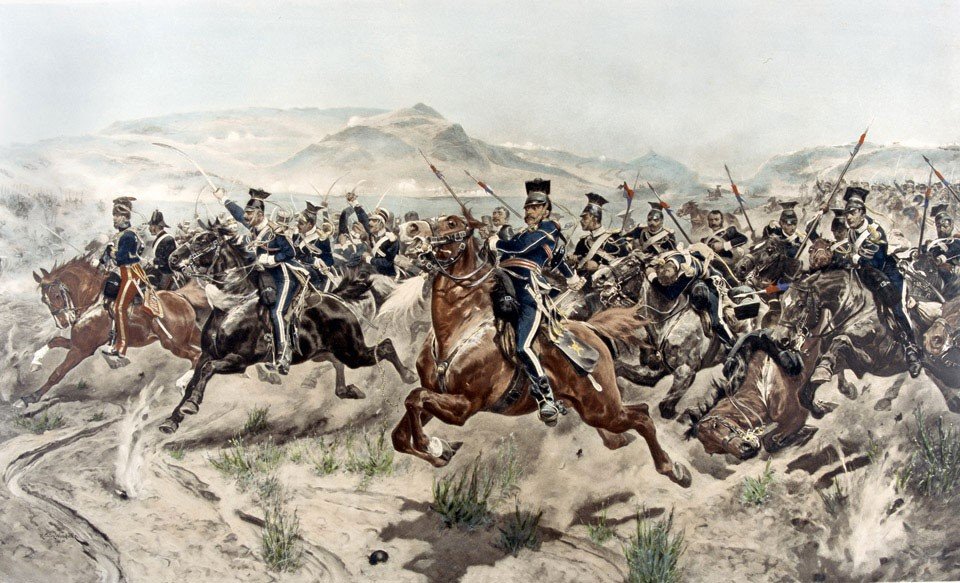
A cavalry brigade charges the wrong guns because of a badly worded order
About 670 British cavalry rode up a valley at Balaclava on 25 October 1854 into Russian guns firing from three sides. The order had meant a different battery; the officer who carried it was killed before he could explain. Roughly 110 were killed and 160 wounded, and the brigade ceased to exist as a fighting force. It was reported as a triumph.
-

An exhausted army wins against odds of three to one because of its archers
Henry V's army, sick and short of food after a long march, met a much larger French force near Agincourt on 25 October 1415. Heavy rain had turned the ploughed field to mud, and the French knights advanced into it on a narrowing front while English longbowmen shot into the crush. The French dead included much of their nobility.
-
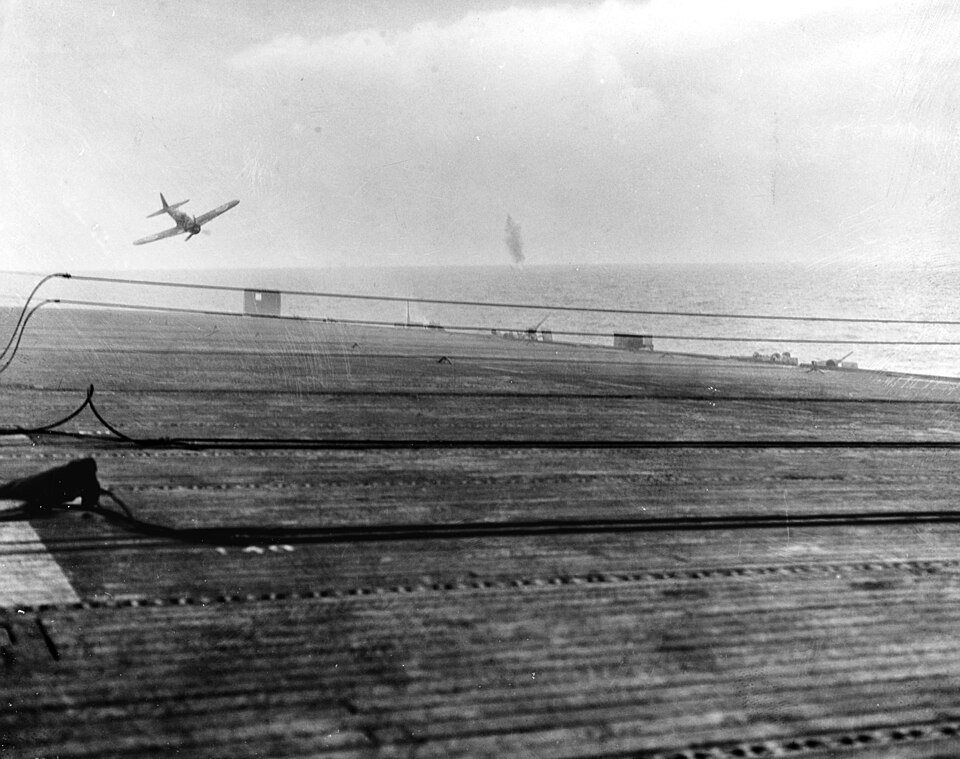
Pilots are sent to crash their aircraft into ships deliberately for the first time
The first organised suicide attacks were flown against American escort carriers off Leyte on 25 October 1944, sinking one and damaging several others. The unit had been formed five days earlier out of the recognition that Japanese pilots were no longer good enough to survive a conventional attack. Around 3,800 pilots died this way before the war ended.
-

A king of 22 comes to the throne who will reign sixty years and lose America
George III succeeded his grandfather on 25 October 1760 and reigned for 59 years, longer than any English king before him. He was the first of his line born in England and the first to speak English as a first language. The recurring illness that cost him the last decade of his reign was long blamed on porphyria, though that diagnosis is now doubted.
-

The first writer buried in the corner of an abbey that became a poets cemetery
Chaucer died on 25 October 1400, the date taken from a tomb inscription cut more than a century later. He was buried in Westminster Abbey because he had been Clerk of the King's Works and held a lease nearby, not because he was a poet. Others were later buried around him, and the corner of the transept became Poets' Corner.